
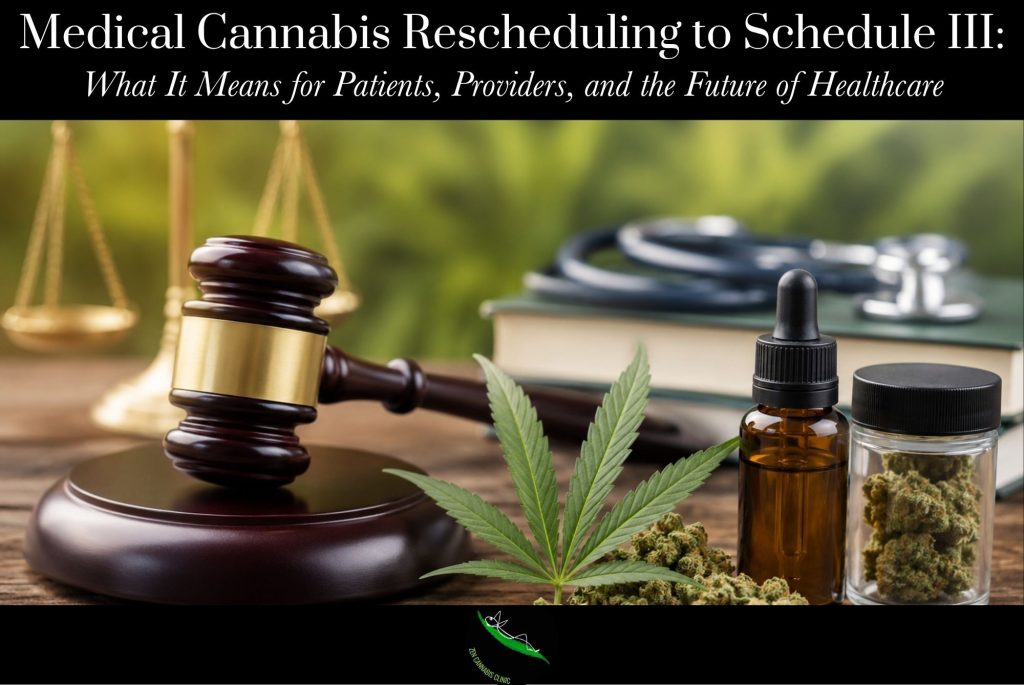
The conversation surrounding medical cannabis in the United States has reached a historic turning point. The proposed rescheduling of cannabis from a Schedule I controlled substance to a Schedule III controlled substance represents one of the most significant policy changes in modern healthcare. For patients, physicians, researchers, and medical cannabis clinics, this potential shift could open new opportunities while helping to reduce longstanding barriers to access and scientific study.
At Zen Cannabis Clinic, we believe patients deserve accurate, up-to-date information about changes that may impact their healthcare options. Understanding what cannabis rescheduling means can help patients make informed decisions about their medical treatment and future access to cannabis-based therapies.
Understanding the Controlled Substance Scheduling System
The Controlled Substances Act (CSA) categorizes substances into five schedules based on their medical use, potential for abuse, and safety profile.
Schedule I Substances
Schedule I substances are considered to have:
- No currently accepted medical use in treatment
- A high potential for abuse
- A lack of accepted safety for use under medical supervision
Historically, cannabis has been classified as a Schedule I substance alongside drugs such as heroin and LSD.
Schedule III Substances
Schedule III substances are considered to have:
- Accepted medical uses
- Moderate to low potential for physical dependence
- Lower abuse potential compared to Schedule I and II substances
Examples include:
- Ketamine
- Testosterone
- Certain codeine-containing medications
- Anabolic steroids
The proposed move to Schedule III acknowledges the growing body of scientific evidence supporting cannabis’s therapeutic applications.
Why Is Cannabis Being Rescheduled?
The push for rescheduling stems from years of research, patient advocacy, state-level medical cannabis programs, and recommendations from healthcare agencies.
Research has demonstrated potential therapeutic benefits for conditions including:
- Chronic pain
- Multiple sclerosis symptoms
- Cancer-related nausea and vomiting
- Epilepsy and seizure disorders
- PTSD related sleep issues
- Anxiety disorders related to PTSD
- Traumatic brain injury
- Gastrointestinal symptoms related to IBD (Crohn’s disease and Ulcerative Colitis)
- Neuropathic pain
As more states have legalized medical cannabis and clinical evidence has expanded, federal agencies have increasingly recognized that cannabis no longer fits the criteria for a Schedule I classification.
What Schedule III Status Could Mean for Patients
Improved Access to Medical Cannabis
One of the most significant potential benefits is increased access for qualifying patients. While state medical cannabis programs would continue to operate under existing regulations, federal recognition of medical use could strengthen the legitimacy of medical cannabis treatment.
Reduced Stigma
Many patients have avoided medical cannabis due to misconceptions or concerns regarding federal legality. Rescheduling may help reduce stigma and encourage more healthcare professionals to discuss cannabis as a legitimate treatment option.
Expanded Research Opportunities
Researchers currently face numerous obstacles when studying cannabis because of its Schedule I status. Schedule III classification could:
- Simplify research approvals
- Increase funding opportunities
- Expand clinical trials
- Improve understanding of dosing and safety
- Encourage pharmaceutical innovation
Better Healthcare Integration
Healthcare providers may become more comfortable discussing cannabis therapies when federal law acknowledges medical value. This could lead to more coordinated patient care and evidence-based treatment planning.
Benefits for Healthcare Providers
Physicians and medical cannabis specialists could see several advantages from rescheduling.
Enhanced Clinical Research
More research means physicians can make recommendations based on stronger scientific evidence and improved treatment protocols.
Greater Professional Confidence
Federal acknowledgment of medical cannabis use may help providers integrate cannabis discussions into standard patient care.
Improved Education and Training
Medical schools, continuing education programs, and healthcare institutions may invest more heavily in cannabis education.
Economic Implications of Schedule III Rescheduling
The cannabis industry may experience substantial economic changes.
Tax Relief for Cannabis Businesses
Currently, cannabis businesses face significant tax burdens under IRS Code Section 280E. Schedule III status could eliminate these restrictions for many cannabis operators.
Potential outcomes include:
- Lower operating costs
- Increased investment
- Business expansion
- Improved patient services
- Enhanced product quality
Industry Growth
The medical cannabis sector could see accelerated growth as businesses gain improved access to banking, investment, and research partnerships.
Will Medical Cannabis Become Federally Legal?
This is one of the most common misconceptions.
Rescheduling to Schedule III does not automatically legalize cannabis nationwide. State laws will continue to govern medical cannabis programs, and federal regulations will still apply.
However, the move would represent a major shift in federal policy and could lay the groundwork for future reforms.
Potential Challenges Ahead
While rescheduling is a positive development for many stakeholders, challenges remain.
Regulatory Complexity
Federal and state regulations may continue to differ, creating compliance challenges for businesses and patients.
Insurance Coverage Questions
Although rescheduling may improve legitimacy, it does not automatically guarantee insurance coverage for medical cannabis treatments.
Ongoing Legal Considerations
Employers, housing providers, and federal agencies may still maintain policies affecting cannabis users.
The Future of Medical Cannabis
The proposed Schedule III classification may signal a broader transformation in how cannabis is viewed within healthcare.
Potential future developments include:
- Increased clinical research
- New cannabis-based medications
- Expanded physician participation
- Greater patient acceptance
- Improved treatment standards
- Enhanced regulatory clarity
As the medical cannabis landscape evolves, patients should stay informed and consult qualified medical professionals regarding eligibility, treatment options, and state-specific regulations.
Why Choose Zen Cannabis Clinic?
At Zen Cannabis Clinic, we are committed to helping patients navigate the evolving world of medical cannabis. Our knowledgeable team stays current with the latest developments in cannabis policy, research, and patient care to provide accurate guidance and compassionate support. Our team provides a patient centered approach to care, delivering concierge experience to our patients. Our staff are expert in cannabis science and will guide you through treatments.
Whether you are exploring medical cannabis for the first time or renewing your certification, we are here to help you understand your options and make informed healthcare decisions.
Frequently Asked Questions (Q&A)
Q: What does it mean for cannabis to be moved to Schedule III?
A: It means the federal government would officially recognize that cannabis has accepted medical uses while acknowledging a lower abuse potential than Schedule I substances.
Q: Will cannabis become federally legal if it moves to Schedule III?
A: No. Rescheduling does not equal full federal legalization. Cannabis would remain a controlled substance, though under less restrictive regulations.
Q: Can patients still use state medical cannabis programs?
A: Yes. State medical cannabis programs would continue operating under their existing rules and regulations.
Q: Will doctors be able to prescribe cannabis?
A: The legal framework remains complex. While rescheduling could change certain aspects of federal regulation, cannabis would still be subject to specific federal and state laws.
Q: How could rescheduling impact medical cannabis research?
A: Researchers may face fewer administrative barriers, allowing for more clinical studies and a better understanding of cannabis-based treatments.
Q: Could medical cannabis become covered by insurance?
A: Rescheduling alone does not guarantee insurance coverage, but it may improve the likelihood of future consideration by insurers.
Q: Will cannabis products change after rescheduling?
A: Patients may eventually benefit from improved product development, quality standards, and innovation as research expands.
Q: Does Schedule III mean cannabis is completely safe?
A: No medication or treatment is completely risk-free. Patients should always consult qualified healthcare professionals before beginning any cannabis-based treatment.
Q: How can patients determine if medical cannabis is right for them?
A: A consultation with a qualified medical cannabis provider can help determine whether cannabis may be appropriate for a patient’s specific condition and medical history.
Q: Where can I learn more about medical cannabis eligibility?
A: Contact Zen Cannabis Clinic to discuss your situation with experienced professionals who can provide guidance regarding your state’s medical cannabis requirements.
Contact Information
Zen Cannabis Clinic
📞 Cell Phone: (214) 646-2936
Website: zencannabisclinic.com